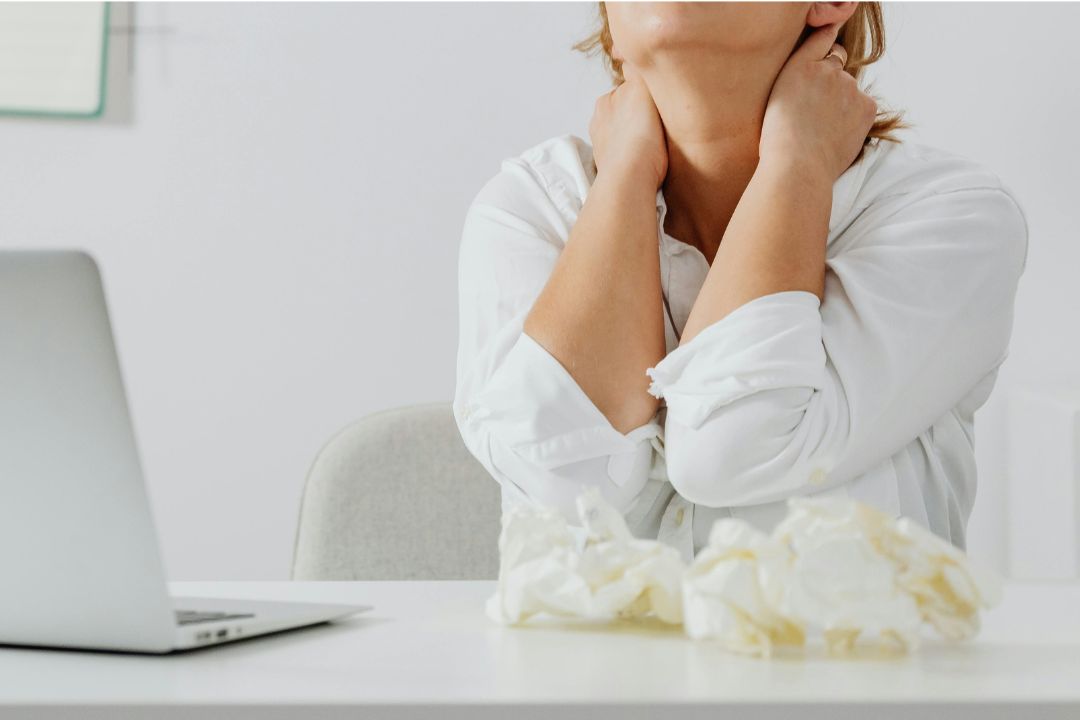
It is quite common for people who spend long hours sitting to experience back or neck discomfort. This problem is especially frequent among office workers and anyone who works in front of a computer. Relieving these pains can be somewhat difficult since the work routine must continue. Fortunately, there are some exercises, such as office stretches, that can be easily performed to improve postural education.
Do you want to know more about how to correct bad posture? Keep reading!
What does postural education mean?
Humans are the only animals that remain constantly bipedal and live entirely on two legs. Although it seems completely normal to us, our musculoskeletal system has not fully adapted yet. This often results in back pain, muscle contractures, spinal deviations, and other discomforts associated with the daily weight we carry on our back, especially in the lumbar area.
To avoid chronic pain, prevention is better than cure — that’s why specialists place such strong emphasis on postural education.
Do you know what this concept refers to? We’ll explain it to you!
Postural education refers to learning and internalizing correct body postures to avoid the musculoskeletal conditions that occur when we repeatedly subject our bodies to harmful positions — such as spending too much time sitting or standing still. When we stay in the same position for too long, the body tends to relax and adapt, overloading specific areas.
There are numerous factors behind posture, such as fatigue, muscle tone, heredity, and even emotions.
Postural education focuses on correcting and internalizing healthy positions so that we adopt them automatically.
How does postural education help improve your body’s health?
Physiotherapists and rehabilitation experts emphasize postural hygiene because of its many benefits. However, results take time — consistency is key until our body internalizes them.
- Reduction of discomfort and pain: Good postural education helps maintain proper spinal alignment, reducing tension and muscle stress — and therefore minimizing pain in the back, neck, and shoulders.
- Injury prevention: Adopting the correct posture when performing daily activities such as lifting objects or sitting at a computer helps prevent musculoskeletal and joint injuries.
- Improved respiratory function: A correct posture allows for full chest expansion, which enhances lung ventilation and optimal oxygenation of the body.
- Muscle strengthening: Maintaining proper posture involves correct use of the body’s support muscles, which contributes to greater strength and stability.
- Prevention of circulatory problems: A correct position promotes healthy blood and lymphatic circulation, helping to avoid issues like poor circulation and swelling in the limbs.
- Greater movement efficiency: Proper posture improves body alignment, resulting in better movement efficiency and overall physical performance.
- Mental health benefits: Adopting an upright and balanced posture can have positive effects on mood and self-esteem, as it is associated with greater confidence and a more positive self-image.
What are the most common spine-related conditions?
The spine supports more than half of the body’s total weight and, over the years, it wears down. These are the most common conditions that appear when proper postural education is lacking:
- Herniated disc: Occurs when the gel-like nucleus of an intervertebral disc shifts outward, compressing nearby nerves. Causes include sudden movements, excessive strain, aging, and disc wear.
- Scoliosis: An abnormal lateral curvature of the spine. The cause is often unknown (idiopathic scoliosis), but it can also be congenital or result from other medical conditions.
- Low back pain: Pain in the lumbar region caused by injury, muscle strain, herniated disc, arthritis, or poor posture.
- Cervical pain: Sharp discomfort in the neck area, usually due to muscle tension, injuries, osteoarthritis, or cervical disc herniation.
- Spinal stenosis: Occurs when the spinal canal narrows, compressing the spinal cord or nerve roots. Causes include aging, herniated discs, osteoarthritis, or congenital problems.
- Disc protrusion: A deformation of the intervertebral disc that slips out of place without breaking its outer layer. The main cause is disc wear and degeneration. Spondylolisthesis: Occurs when one vertebra slips forward over the one below it, possibly due to congenital defects, trauma, or chronic degeneration.
- Vertebral fractures: May result from trauma, osteoporosis, or bone diseases.
- Nerve impingement: Occurs when a nerve is compressed or trapped between vertebral structures, causing pain and other symptoms. This can be due to herniated discs, bone spurs, or spinal stenosis.
- Spondylosis: Refers to the wear and aging of the spine, which can lead to problems such as osteoarthritis and chronic pain.
Take note of these 7 postural education tips and avoid back pain!
Finally, we don’t want to end this post without offering you some practical solutions for your back problems. Pay attention to the following seven tips to improve your posture and overall spinal health.
- Ensure an ergonomic seat at work: Make sure your workspace is properly set up to promote correct posture. Adjust the chair and desk height so your elbows align with the keyboard and your feet rest on the floor. Keep the monitor at eye level to avoid bending your neck.
- Maintain good posture while sitting: If you spend a lot of time seated, keep your back straight, shoulders relaxed, and feet flat on the floor or on a footrest. Avoid crossing your legs and change positions frequently.
- Do strength exercises: Perform exercises that strengthen your back, abdomen, and neck muscles to help maintain proper posture and prevent injuries.
- Do regular stretches: Incorporate stretching into your daily routine to improve flexibility and reduce muscle tension, paying special attention to the neck and lower back.
- Watch your sleeping posture: Choose a mattress and pillow that provide good spinal support while you sleep. The best sleeping positions are on your side or back, with a suitable pillow for your neck.
- Lift objects correctly: When lifting heavy objects, bend your knees while keeping your back straight and use your leg muscles to lift. Avoid twisting your body while holding a heavy load.
- Take active breaks: If your job requires long periods of sitting, take breaks every hour to stand up, walk around, and stretch. This helps reduce muscle tension and improve circulation.
Wait — we’re not done yet! You can keep learning about Occupational Risk Prevention (ORP) and workplace health by subscribing to Educa.Pro. We’ll be waiting for you!



.jpg)
.jpg)
