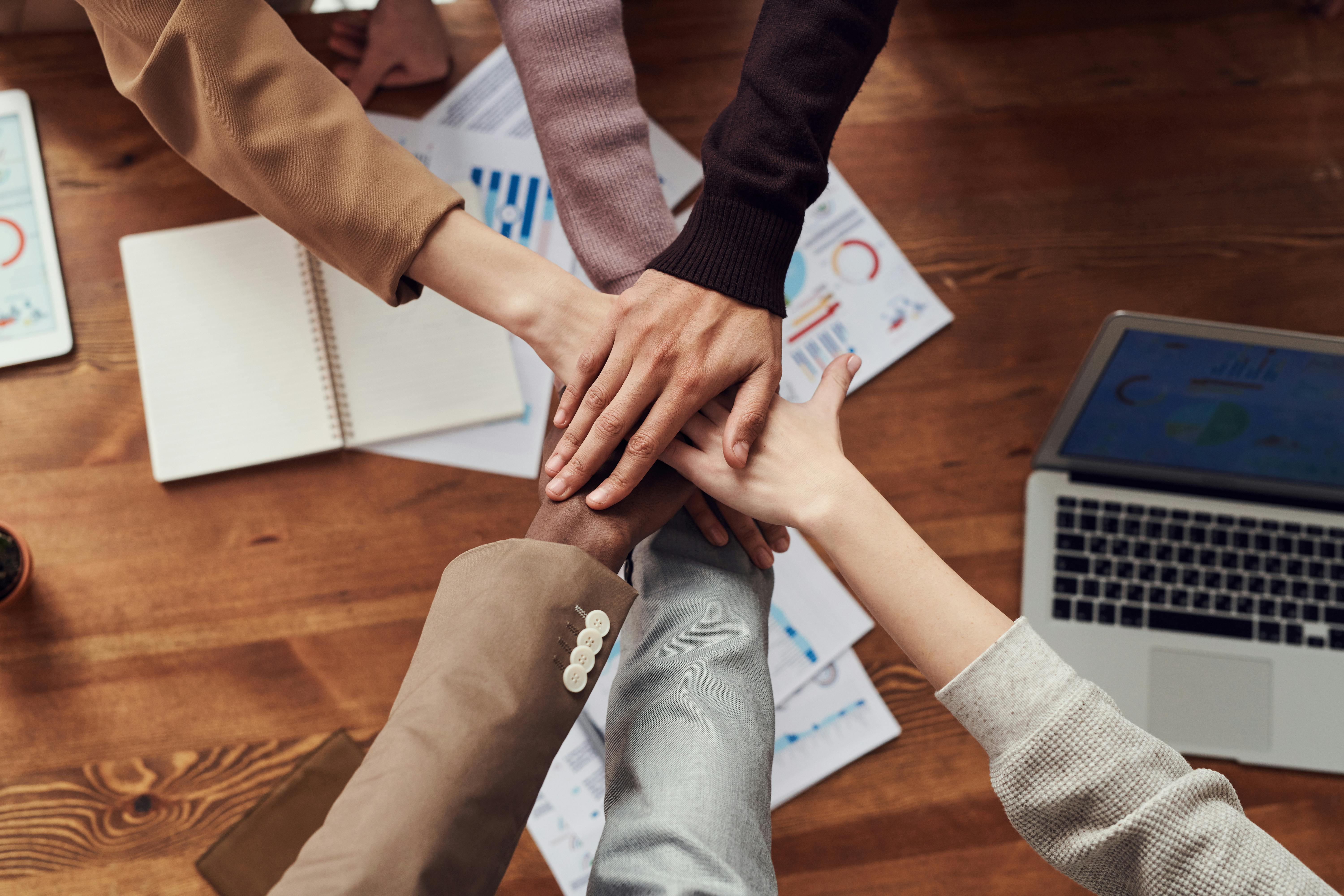
The Tuckman model focuses on optimizing team performance by describing the stages teams go through from their formation to their dissolution. This model includes the phases of forming, storming, norming, performing, and adjourning. The text examines these stages, explaining how each contributes to understanding group dynamics and improving effectiveness in collaboration. It highlights the advantages of the model and its application in today's workplace, including managing diverse teams and remote work, with an emphasis on strategies for cohesion and efficiency.
Bruce Tuckman developed the model that bears his name in 1965. He focused his interest on team performance and wondered what the best way to optimize it was. From this question arose his theory, which outlines a set of stages explaining the phases a team goes through from its formation to its dissolution (a stage added by the author himself in 1977). Composed of the forming, storming, norming, performing, and adjourning phases, it offers a framework for understanding group dynamics on one hand and improving collaboration effectiveness on the other.
The Tuckman model has been widely accepted since its introduction. This is because the stages are easy to understand, making them applicable in practice, where clear ideas and guidelines are needed to improve the processes of team formation and evolution. These stages help both leaders and team members manage tasks, challenges, and typical group dynamics situations. The goal in all cases is the same: to achieve common objectives through cooperation.
The name of this stage is self-explanatory: it refers to the moment when teams are formed according to the needs and characteristics of the project. As part of this process, members begin to interact with the goal of getting to know each other, understanding their roles, and adopting shared goals oriented toward results. The first interactions are often marked by uncertainty—leading to anxiety—and by efforts to stand out. Thus, relationships are superficial and conflict-free. At this point, the leader’s role is to identify each member’s strengths and guide them toward a common goal.
What comes after the first interactions? Over time, through work sessions, team members gain more confidence; as a result, they feel comfortable expressing their points of view. They may refer to the actions of one or several teammates and even the behavior and decisions of the leader. Conflicts then arise. At this stage, leaders must intervene to foster active communication and listening, ensuring contributions remain constructive. The goal is to mediate to create a positive environment.
What happens once conflicts are overcome? First, a climate is achieved in which each member clearly recognizes their functions and the scope of their activities. Personal differences are set aside to meet group objectives, paving the way for active collaboration, cooperation, communication, and respect. As for the leader, they gain greater leadership by delegating tasks and responsibilities and encouraging autonomous work. The team now makes decisions collectively, which clearly impacts project efficiency and progress.
As noted, normalization leads to a high level of collaboration. From this stems the increase in team performance: autonomous work is strengthened, collaboration becomes the main premise for results, and each member’s skills are recognized. Additionally, the bonds between team members are strengthened; that is, there is a greater sense of belonging, support, and acknowledgment of roles. With proactivity as a hallmark, the team contributes to achieving projects and, therefore, to the company’s growth. The leader’s role remains essential; in fact, they carefully supervise team tasks and delegate.
Later added by Tuckman, this phase refers to the dissolution of the team once its objectives have been achieved—that is, upon completing the project or set of tasks. What characterizes this stage of the Tuckman model? Feelings of loss emerge, as members separate. Each one takes on new tasks or projects, which often brings greater satisfaction. At this point, the leader’s role becomes vital again, as they must manage these emotions. Their task is to recognize both individual and group achievements and to employ motivation strategies to help the team process the separation positively.
The Tuckman model allows for understanding the process of team formation and subsequent action in a specific task or project. It provides a framework for understanding and guidance to ensure the individual performance of each member and the strength of the team as a whole. Thus, the Tuckman model offers the following advantages:
Applying the Tuckman model to the current workplace context involves not only understanding its stages but also considering other important aspects. One of them is that these stages are often viewed as linear. However, in practice, group dynamics may move through different stages depending on the characteristics of the task or project, the experience of team members, and the leader’s management ability.
In addition, teams are becoming increasingly diverse due to the use of new technologies, where remote work plays a major role, and collaboration among colleagues from different parts of the world increases. So, how can teams be managed efficiently? The leader must be capable of handling intercultural groups to foster cohesion and participation. In any case, the stages serve as a reference that allows leaders to anticipate and intervene at the same time. As seen, the main goal is team satisfaction, high performance, and efficient task completion.