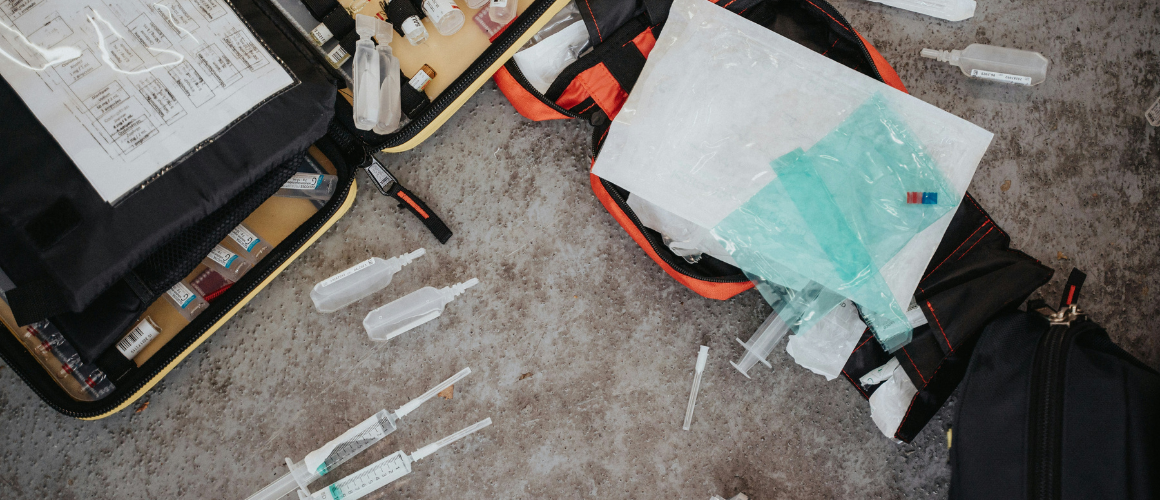
An accident at work strikes without warning. What you can prepare for, however, is how to respond. The Occupational Health and Safety Act clearly states that Every company has a duty to ensure that there are staff trained in first aid, in sufficient numbers and at a level appropriate to the risks involved in the activity. However, first-aid training remains an unresolved issue for many companies: it is outsourced, postponed or dealt with through generic training courses that do not address the actual risks in the workplace.
What the Occupational Health and Safety Act says about first aid: employers’ obligations
Article 20 of Law 31/1995 on the Prevention of Occupational Risks stipulates that employers must take the necessary measures with regard to first aid, ensuring that there are sufficient numbers of suitably trained staff with access to first-aid equipment. The Royal Decree 486/1997 It sets out these obligations for workplaces as follows: a designated first-aid room is compulsory for workplaces with 50 or more employees or where the nature of the work so requires, and an emergency first-aid kit must be provided in every workplace. The legal liability An employer’s liability in the event of an accident involving casualties is assessed, amongst other criteria, on the basis of whether trained staff were available and whether first-aid equipment was accessible and in good working order. The absence of documented training increases the employer’s liability, even where the accident was not work-related.
How many staff members trained in first aid does your company need?
There is no fixed statutory ratio first-aiders appointed by employees under Spanish regulations, but the INSST technical guide (National Institute for Occupational Safety and Health) sets out guidelines which the Labour Inspectorate uses as a reference: at least one trained worker per workplace in low-risk companies, and a minimum ratio of one first-aider for every 50 workers on shift in medium- or high-risk activities. The criteria that influence the required number are the size of the workforce, shift patterns (whether there are night shifts or weekend shifts without regular cover), the level of risk associated with the activity, and the geographical distribution of the workplaces. A company with 30 employees in an office has very different requirements to one with 30 employees in an industrial plant with machinery.
Minimum content of first-aid training by risk level
First-aid training is not the same for all settings. The level and content must be tailored to the actual risks associated with the activity, the profile of the workers and the most likely emergencies in each workplace.
First Aid in the Workplace: When it is compulsory and how to organise training
The automated external defibrillator (AED) It is the device that saves the most lives in cases of sudden cardiac arrest outside a hospital setting. The regulations on its mandatory installation in workplaces It varies depending on the autonomous community: Some regulations require them to be installed in workplaces with more than 50 employees, whilst others are based on the number of visitors or the size of the premises. What remains the same is that, if there is an AED at the workplace, Workers must know how to use it. A device installed without training is a missed opportunity: in the event of a cardiac arrest, every minute without defibrillation reduces the chances of survival by between 7% and 10%. AED training must include practical sessions with the actual device or a simulator, and must be refreshed regularly to maintain effective competence.
How to organise and document first-aid training: what the Inspectorate checks
The Labour Inspectorate, in the event of an accident involving casualties or in the context of a health and safety audit, will request specific documentation regarding first-aid training. The documents that must be kept are: individual training certificates for each designated worker, including the date, content and hours; list of first-aiders by centre and shift; record of renewals on a regular basis; and evidence that first-aid supplies are up to date and accessible. For the purposes of the Inspectorate, training that is not documented is deemed not to exist. This applies to both initial training and periodic refresher training.
How to claim funding for first-aid training through FUNDAE and choose the right provider
First-aid training is eligible for a subsidy through FUNDAE both face-to-face and blended learning formats, provided that the provider is accredited and the training includes practical elements. Eligible courses are those covering the minimum content set by the INSST: CPR, AED, treatment of trauma and bleeding, and airway management. To apply for the subsidy, the company must notify the organising body of the training before it begins; the organising body is responsible for liaising with FUNDAE. The criteria for selecting a suitable provider are: accreditation as an occupational health and safety (OHS) training provider; instructors holding official qualifications in first aid or emergency response; the use of manikins and training AEDs during practical sessions; and individual certificates issued upon completion. From the Educa.Pro’s Health and Wellbeing catalogue You’ll find first-aid courses tailored to each level of risk, with accredited certification and FUNDAE processing included.
First-aid training is not just a formality: it is the difference between a company that can respond to an emergency and one that is powerless to act until the ambulance arrives. That difference is measured in minutes. And in lives.