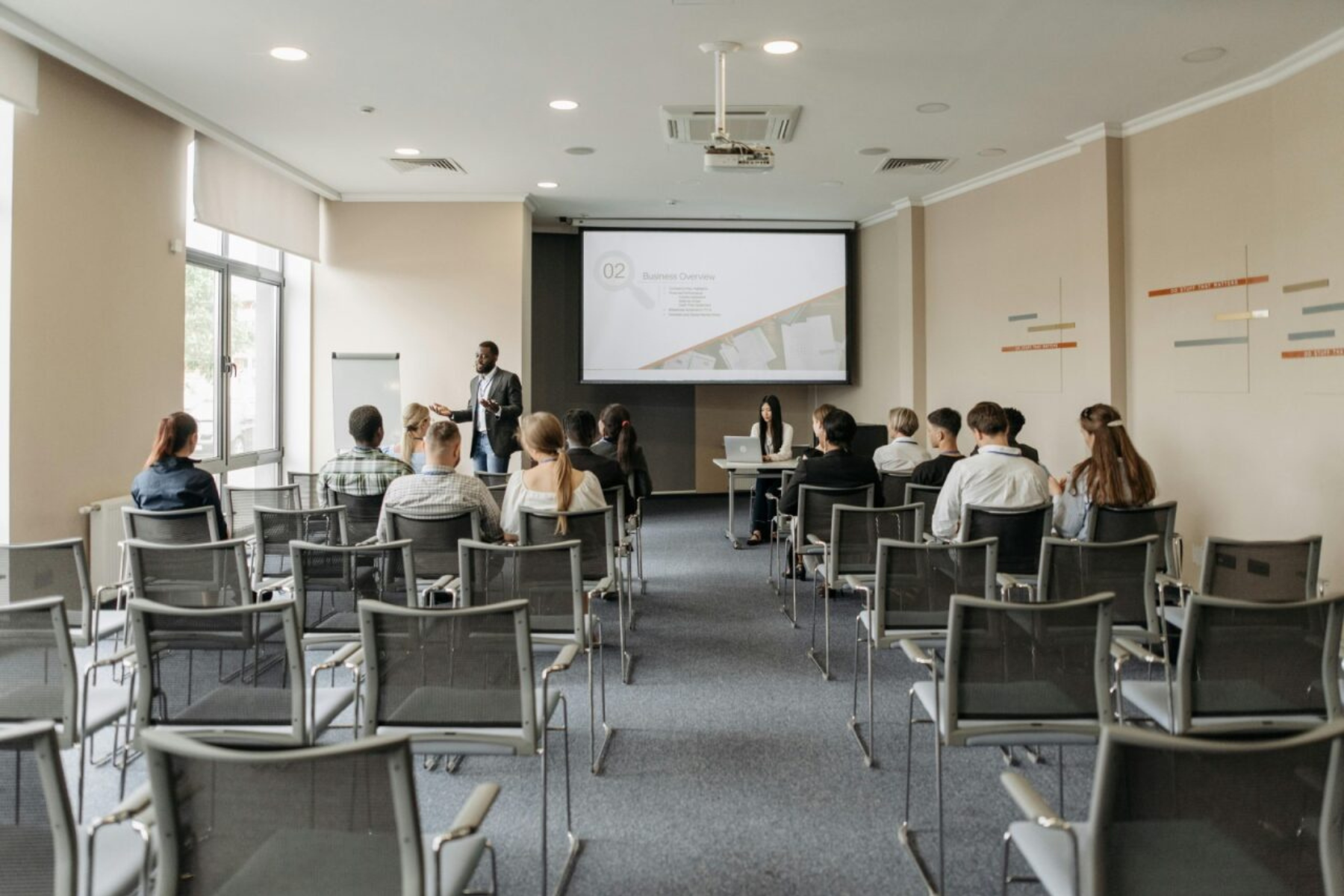
How to organise a workshop on entrepreneurship and personal finance
If you’re thinking of teaching courses on entrepreneurship and personal finance, the first step is to find out how to organise a workshop. To begin with, it is essential – amongst other things – to set clear objectives, identify your target audience and decide on the content you wish to include. A good workshop on entrepreneurship and personal finance must be designed so that participants can practise and apply what they have learnt straight away in their own lives, whether in their businesses or in their personal lives. In this article, We’re going to take an in-depth look at the key factors for setting up a successful workshop.
What is an entrepreneurship workshop?
A entrepreneurship workshop These are sessions designed to help participants gain the knowledge and skills they will need when starting or running their own business. These workshops take a more practical and dynamic approach, tailored to the group. The aim of the entrepreneurship workshops is therefore for participants to come away with specific tools y fundamental to be carried out at their business.
Why set up a workshop of this kind?
Nowadays, the demand for education that is both practical and useful is on the rise, which is why the practical financial education is essential. That is why, set up an entrepreneurship course It is an excellent option for meeting these needs and helping people achieve financial independence. Furthermore, these workshops are a powerful tool in educational, workplace and community settings, and can be adapted to suit different groups such as young people, the unemployed, the self-employed, etc.
Step 1: Define the aim of the workshop
Firstly, to find out how to set up a Step-by-step personal finance workshop, the first step is to define its objective. Questions you might ask yourself include: do you want to encourage self-employment? Or help people manage their money better? It is also important to decide whether it will be an introductory or advanced workshop, as the depth of the content will depend on this. Likewise, when selecting the activities and the workshop activities To put it more simply, you need to take the target audience into account – that is, their age, prior knowledge and needs.
Step 2: Design the key content
Now that the objectives have been set, the next step is to decide which topics and skills you want to focus on in the workshop. This involves presenting the information in a progressive manner, from the most basic to the most advanced, whilst also combining theory and practice. It is also worth including real-life case studies and exercises that link the workshop content to the participants’ actual day-to-day situations.
Entrepreneurship workshop
As for the key content that an entrepreneurship workshop should cover, the most important aspects are the knowledge and skills needed to launch a project, such as generating ideas and putting them into practice. The resources for entrepreneurs Guides, templates and digital tools can be very useful, as can techniques for learning to be an entrepreneur.
Personal finance workshop
For a personal finance workshop, the content should include techniques for participants on how to manage your money effectively. Some of these may be strategies for controlling expenditure, managing income or planning goals for savings. Therefore, personal finance workshops should cover topics such as saving, investing, debt management, etc.
Step 3: Choose the format and duration
The next step is to decide how the workshop will be run. You can choose from different formats – in-person, online or hybrid – depending on participants’ availability and the resources at your disposal. Furthermore, It is important to set an appropriate duration, ranging from a two-hour workshop to a full day’s session or a modular programme. Whichever option you choose, it is essential to include breaks, opportunities for interaction and activities such as games, simulations or real-life case studies, in order to to maintain participants’ attention and engagement during the workshop.
Step 4: Materials and tools you can use
The right materials and tools can make all the difference when it comes to understanding and applying the content taught in the workshop. Interesting resources You can create budget templates and business model canvases. In addition, there are many applications tools such as Fintonic, Splitwise, Notion or Trello, which can make it easier to manage your finances and projects. Finally, podcasts and videos can serve as a the perfect complement the content taught.
Step 5: Promotion and registration
Last but not least, Effective promotion and publicity for the workshop are essential to attract participants. You can promote it on social media as well as through associations, educational institutions and co-working spaces. Furthermore, create an eye-catching poster or organise an event On platforms such as Eventbrite, this can be key to grabbing people’s attention. Similarly, including testimonials from other participants, details of the workshop’s benefits or incentives such as discounts can help you attract more participants and sign-ups.
Looking for inspiration? Here’s how Educa.Pro does it
In Educa.Pro we design online training workshops with a practical, interactive approach that can be tailored to each person’s needs. We use intuitive platforms that provide easy access to content and allow you to track your progress. As for our success stories, we have worked with groups undergoing career transitions, helping them to acquire key skills in both entrepreneurship and personal finance. Furthermore, We tailor the content to suit any profile, whether they are people embarking on their first project, self-employed individuals looking to improve the way they manage their business, or people wanting to streamline the way they organise their personal finances.
Conclusion
Ultimately, setting up a workshop on entrepreneurship and personal finance involves a good planning. By following the steps outlined above, you will be able to organise the workshop more effectively and deliver clear, practical training tailored to your audience. In this way, not only you’ll share your knowledge, but rather you will inspire to encourage participants to turn their ideas into real projects.