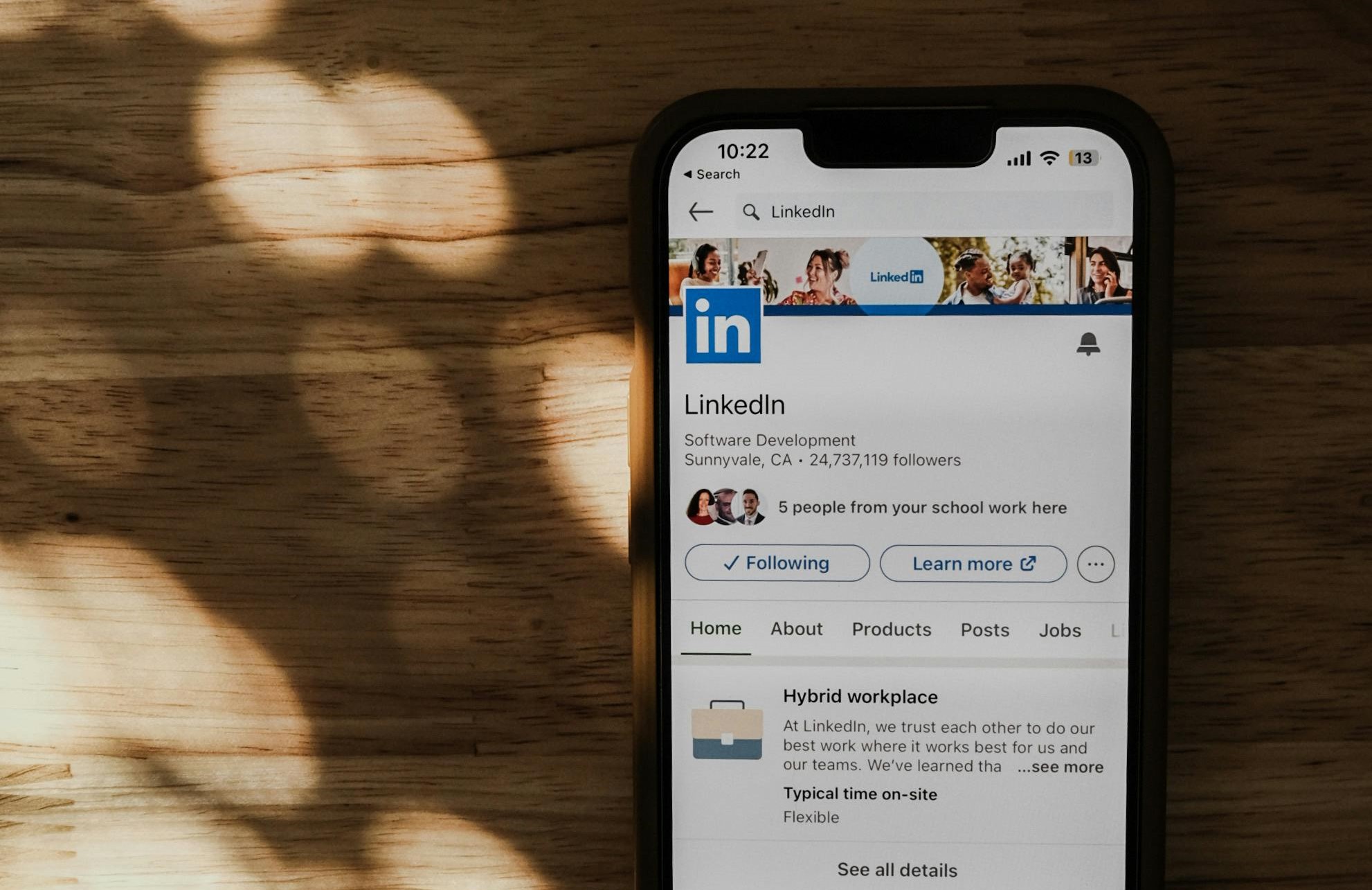
LinkedIn is a social network for niche, which is primarily aimed at building professional relationships and career development. Whilst Facebook and Instagram allow us to share personal moments and connect with friends, LinkedIn It has established itself as the go-to platform for those looking to forge meaningful professional connections.
More than just an online CV, LinkedIn has become a place to showcase skills, to share knowledge and connect with colleagues from all over the world. Just as in the real world, your presence and engagement on LinkedIn can open doors to new opportunities. That said, standing out in this space can be tricky. That’s why, in this post, we’re sharing Seven tips for creating a LinkedIn profile. Let's get on with it!
LinkedIn features
LinkedIn, as a social network, was established in 2002 by Reid Hoffman, Allen Blue, Konstantin Guericke, Eric Ly and Jean-Luc Vaillant. However, it was officially launched on 5 May 2003.
Since its launch, LinkedIn has grown significantly. In fact, according to the website Statista, it is estimated that, by the end of 2023, the social network had reached more than 746 million users. There is no doubt that it has become an essential tool both for established professionals and for those looking for work or wishing to build a professional network.
In fact, its main purpose is to enable the users connect with other professionals, to search for and offer job opportunities, share knowledge and experiences, and promote their professional development. Users can create a LinkedIn profile, which acts as an online CV containing information about your work experience, skills, education and achievements.
The importance of having a professional LinkedIn profile
“If you’re not on social media, you don’t exist.” Have you heard this saying? It may seem rather sweeping, as everyone decides for themselves how to manage their fingerprint, but the truth is that, in such an interconnected world, initial conversations are increasingly likely to take place via social media. So, if you’re looking for a job or want to make your mark in a professional setting, having a LinkedIn profile It is essential.
Firstly, LinkedIn It acts as your digital business card: you can showcase your work experience, skills, education and achievements in an accessible and professional way. This is essential both for job seekers and for those wishing to build meaningful connections within their field.
Furthermore, LinkedIn provides a platform for expand your professional network, as it allows you to connect with colleagues, potential employers, recruiters and influential figures in your industry. These connections provide employment opportunities, business partnerships, mentoring and access to relevant information.
Another important aspect is that this platform provides a powerful tool for the labour research and professional development. You can follow companies and thought leaders, join relevant discussion groups, access educational resources such as online courses, and keep up to date with the latest trends and news in your field.
Tips for creating a successful LinkedIn profile
Have you decided to create or improve your LinkedIn profile yet? If so, your first question is probably where to start. And the thing is, to stand out amongst more than 700 million users It’s a challenge. That’s why we’re sharing this with you seven tips to help you navigate LinkedIn successfully. Take note!
LinkedIn profile photo
Your LinkedIn profile picture is the first impression you make in the professional world. Choose one that a clear and professional image in which your face takes up most of the frame. Avoid selfies or casual photos and Choose a neutral fund.
Also, dress appropriately for your professional field and make sure the lighting is good. A a natural smile and eye contact A professional headshot can help convey confidence and professionalism. This is an opportunity to present yourself in the best possible light, so take the time to choose a photo that reflect your personal brand in a positive way. Remember: a picture is worth a thousand words.
Contact details
Make sure your contact details on LinkedIn are up-to-date and easily accessible. Please include your address professional email address and, if you wish, your telephone number. This will make it easier for recruiters, colleagues and potential employers to contact you quickly. Don’t forget to check this information regularly to ensure it is up to date, as it could be crucial for future career opportunities.
Work experience
Once you have completed the section on work experience On your LinkedIn profile, make sure you detail your responsibilities, achievements and contributions in a way that clear and concise. Use bullet points to highlight your key responsibilities and achievements in each role.
It is also important to include keywords relevant to your industry, as this can increase the visibility of your profile in searches carried out by recruiters and potential employers. Remember to keep the up-to-date information that is consistent with your CV. A detailed and professional description of your career history can be crucial to helping you stand out in today’s competitive job market.
Competence and credibility
Highlight your key skills in the ‘Skills’ section of your LinkedIn profile to highlight your strengths and areas of expertise. Make sure you select skills that are relevant to your professional field and backed up by your work experience. You can do some research beforehand to find out which ones are the most in-demand skills in your area and whether they match your profile.
Furthermore, it considers obtain approvals of your connections for these skills, as this will boost your credibility and visibility on the platform. Check your profile regularly to ensure it reflects any new skills or experience you’ve gained.
Recommendations
Do you have colleagues, supervisors or peers who could recommend you? Ask them to support your professional experience, as they can provide valuable insight into your work performance. When asking for references, be specific about the aspects you would like them to highlight, such as your skills or achievements.
Also, please don’t hesitate to recommend others in your network, as this can encourage a mutual exchange of recommendations.
Stay active
Set aside time on a regular basis to interact with your network, whether by posting updates, taking part in discussions in relevant groups or connecting with new contacts. Share content that is relevant and useful to your industry. Just remember: try to add value and spark discussion; avoid posts that make it seem as though you have a monopoly on the truth on the subject.
Furthermore, take part in constructive discussions and comments in other users’ posts to expand your network and boost your visibility.
Volunteering activities
Finally, if you’ve done any voluntary work, be sure to include this in your LinkedIn profile. Share details about the organisations you’ve worked with, the roles you held and the achievements you made whilst carrying out the volunteering. These experiences can be relevant to your career as they demonstrate skills such as leadership, project management and teamwork.
Now it’s your turn to put all this into practice to make your LinkedIn profile stand out. If you’d like to learn more about this topic, do feel free to follow us on the blog at Educa.Pro.