Often, the terms risk and danger They’re used as synonyms, but are they the same thing? Let’s clear this up straight away: no, the differences are subtle, but significant. Broadly speaking, we can say that the risk refers to the possibility of an adverse or harmful event occurring, and is intrinsically linked to uncertainty and probability. Meanwhile, the danger indicates an immediate or potential threat to people’s health, safety or wellbeing, without necessarily implying an assessment of probability.
Risk goes hand in hand with probability
The risk is a measure of the probability and the scale of an adverse event or loss that may occur in the future. In the workplace, this may include accidents, occupational illnesses or damage to property. It is also important to understand that it is almost impossible to eliminate risk entirely.
However, it is possible to carry out a risk management to identify, assess and mitigate their negative impact and maximise opportunities. Within the field of risk, three distinctions can be made:
- Pure risk: refers to the possibility of an event occurring and resulting in a loss. For example, crashes, collisions, fires or collapses.
- Residual risk: remains even after control measures have been put in place to mitigate the hazards. Although the risk cannot be completely eliminated, it must be continuously monitored and managed in order to reduce it as much as possible.
- Acceptable risk: This refers to the level of risk that a person, organisation or society is prepared to tolerate or accept, depending on its objectives, resources and values. It is based on a balance between the available resources and the mechanisms used to minimise or mitigate risks.
Danger and caution as a response
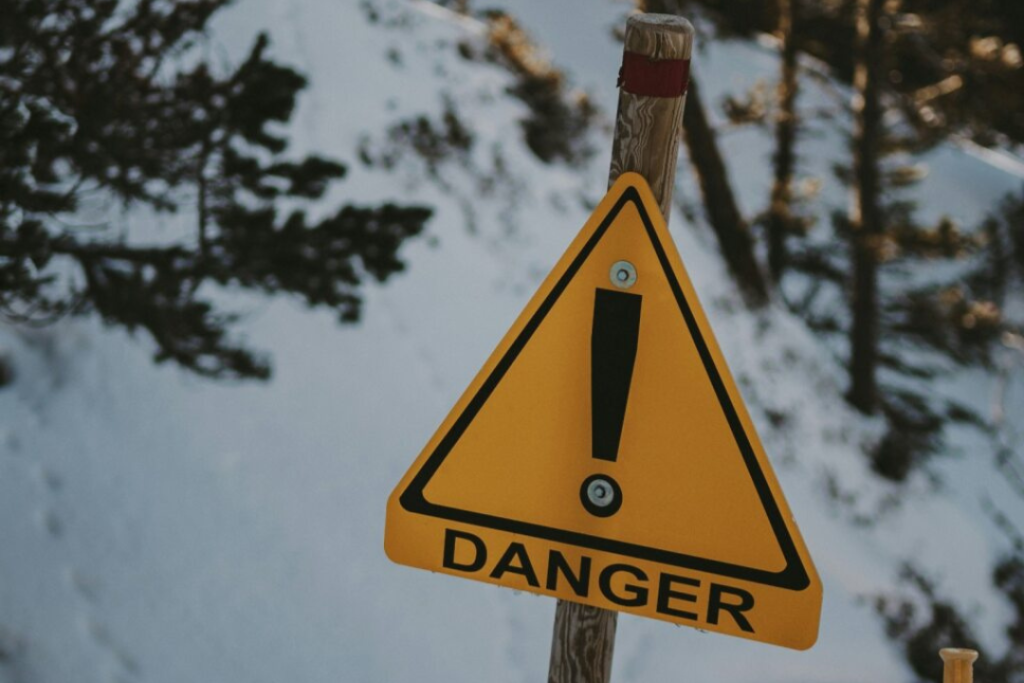
The danger refers to any condition, situation or event that has the potential to cause harm, injury, illness or loss to people or any other matter of concern. In this sense, circumstances that represent a threat to safety and wellbeing are often seen as dangerous.
Hazards can take various forms, including physical hazards such as falls, fires and hazardous chemicals; biological, for example, bacteria or viruses; psychosocial which includes the work-related stress and harassment; ergonomic, and safety issues, such as a lack of signage or faulty machinery.
An important step in tackling the hazard is to identify it. This will enable it to be assessed and addressed preventive measures and appropriate control measures to reduce or eliminate their negative impact.
Four key aspects for distinguishing between risk and hazard
So far, we’ve outlined the characteristics that distinguish risk from hazard. But what exactly sets them apart? Below, we’ll share four key aspects that mark the difference between risk and hazard. Let’s get started!
Nature of the phenomenon
The risk involves assessing the likelihood and severity of an adverse event occurring as a result of exposure to a hazard. Whilst
Potential for damage
The risk assesses the likelihood of an adverse event occurring and the degree of impact what might happen if that were to happen. In the meantime, the danger indicates the the existence of a threat, without necessarily taking into account the likelihood of it happening.
Temporality
In the case of the risk, implies a prospective evaluation of future events based on the probability and potential impact of those events. For its part, the danger is a current condition which poses an immediate or potential threat.
Management approach
As we have explained, the risk management focuses on assessing the potential consequences of adverse situations in order to put control measures in place to mitigate their impact should they occur. The risk management It focuses on identifying, assessing and controlling conditions or situations that may cause harm.
An example of the difference between risk and hazard
Let’s suppose that you’re working in a factory and you need to move a heavy load using a forklift. In such cases, you must wear the appropriate protective equipment. However, you decide to ignore the established safety procedures and do not fasten your seatbelt whilst operating the forklift. In doing so, you are exposing yourself to a risk because there is a risk that you could fall off the forklift and injure yourself due to a failure to comply with the security protocols.
Now, imagine you’re working in the same factory and, whilst operating the forklift without your seatbelt, you come across a an area of the ground that has been weakened and on the verge of giving way. In this case, the situation becomes a immediate danger Well, there is a real possibility that the floor could give way whilst you’re in the lift, which could result in a fall from a considerable height.
Would you like to find out more about risk and hazard management in a business context? Keep reading our blog at Educa.Pro! We recommend this article on the Occupational Health and Safety Actand this other one about the the consequences of having – or not having – good working conditions.