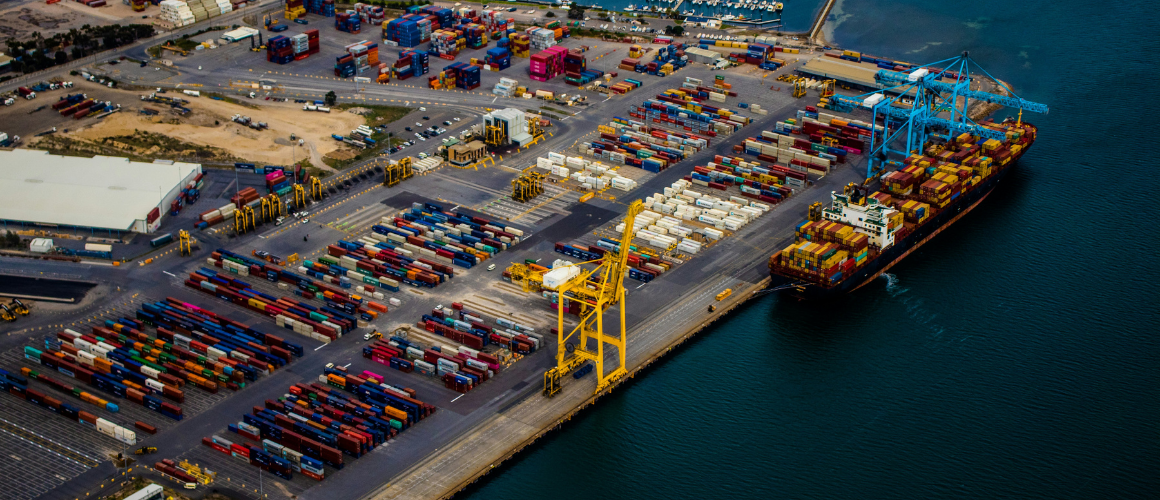
Spanish ports handle more than 60% of the country’s foreign trade. Behind every container that enters or leaves, there is a team that operates cranes, manages documentation, maintains infrastructure and, increasingly, administers highly complex digital systems. An operational error at a terminal is not an isolated incident: it has a knock-on effect that affects shipping lines, importers, exporters and the port itself. In this context, Ongoing training for port teams is not an expense: it is part of the terminal’s strategic assets.
The port as a strategic hub: why training for port teams is critical
Spain is home to some of the most important ports in the Mediterranean and the Atlantic, with Algeciras, Valencia and Barcelona ranking amongst the twenty busiest in Europe. Competition between European ports is direct and growing: Rotterdam, Hamburg and Antwerp are investing steadily in automation and in training their staff. A port that does not train its staff becomes less efficient, experiences a rise in incidents and, in the medium term, loses market share compared to terminals with better-equipped facilities and more reliable processes.
Structure of a port terminal: roles, areas and responsibilities
A container terminal is a complex organisation comprising four main areas, each requiring very different skills: quay and yard operations, equipment and infrastructure maintenance, document management and digitisation. Each area has specific profiles each with their own training needs, and the quality of the service depends on everyone working in a coordinated manner.
Terminal operations: technical skills for front-line teams
Operations teams are the frontline of a terminal’s productivity. The operating RTG cranes, gantry cranes and reach stackers requires specific certification and practical training on a simulator before operating at a real quay. The security protocols In operational areas, these are not optional: the port sector has one of the highest workplace accident rates in Spanish industry, and port health and safety training is a legal requirement before an employee is allowed on site for the first time. What sets a high-performing operations team apart is not just technical mastery of the machinery: it is the the ability to read a stowage plan, anticipate space constraints and make decisions under pressure without disrupting the flow of operations.
Maintenance of maritime terminals and infrastructure: what you need to know and how to become certified
A crane that is out of action during the peak season can result in productivity losses of between 5,000 and 15,000 euros per hour. The preventative and predictive maintenance It is the most effective way of reducing unplanned downtime, but it requires technicians with specific training in the electromechanical, hydraulic and electrical systems of each piece of equipment. Maritime infrastructure adds a further layer of complexity: the marine corrosion, the ROM inspection regulations and working in environments where there is a risk of falling into the water requires training and certification that go beyond standard industrial health and safety requirements. Regular inspection of quays and breakwaters is mandatory under port regulations, and a lack of documented records may result in legal liability in the event of structural incidents.
Digitalisation and smart ports: what digital skills do port teams need right now?
The digital divide between Europe’s leading ports and the Spanish average is one of the most significant factors affecting competitiveness in the sector. The TOS (Terminal Operating System) It is the nervous system of any modern terminal: its efficient use determines the ability to optimise resources in real time. Beyond the TOS, ports that are making the transition to the smart port model incorporate IoT for equipment monitoring, blockchain for document traceability, and AI for demand forecasting and resource allocation. These technologies are already in use at leading Spanish terminals, but most port staff lack the specific training needed to make the most of them. The gap is not a technological one: it is a knowledge gap.
How to structure an annual training plan for a port team
A training scheme for port teams is based on a needs assessment by role: which certifications are currently valid, which ones are due to expire in the coming year, where there are genuine gaps in technical skills, and which digital skills are prioritised under the terminal’s digitalisation plan. The most effective combination is face-to-face or simulator-based technical training in operations and maintenance, supplemented by e-learning for theory, regulations and digital skills. This combination makes it possible to provide training without disrupting shifts and significantly reduces the cost per hour of training. From the Educa.Pro’s Transport catalogue You will find specific training programmes for port staff, with content updated in line with current regulations and FUNDAE subsidy options for the entire workforce.
Operational excellence at a port terminal is not achieved through technology alone: it is built on teams who know how to use, maintain and improve it. Training is the investment with the highest return in any plan to improve port competitiveness.