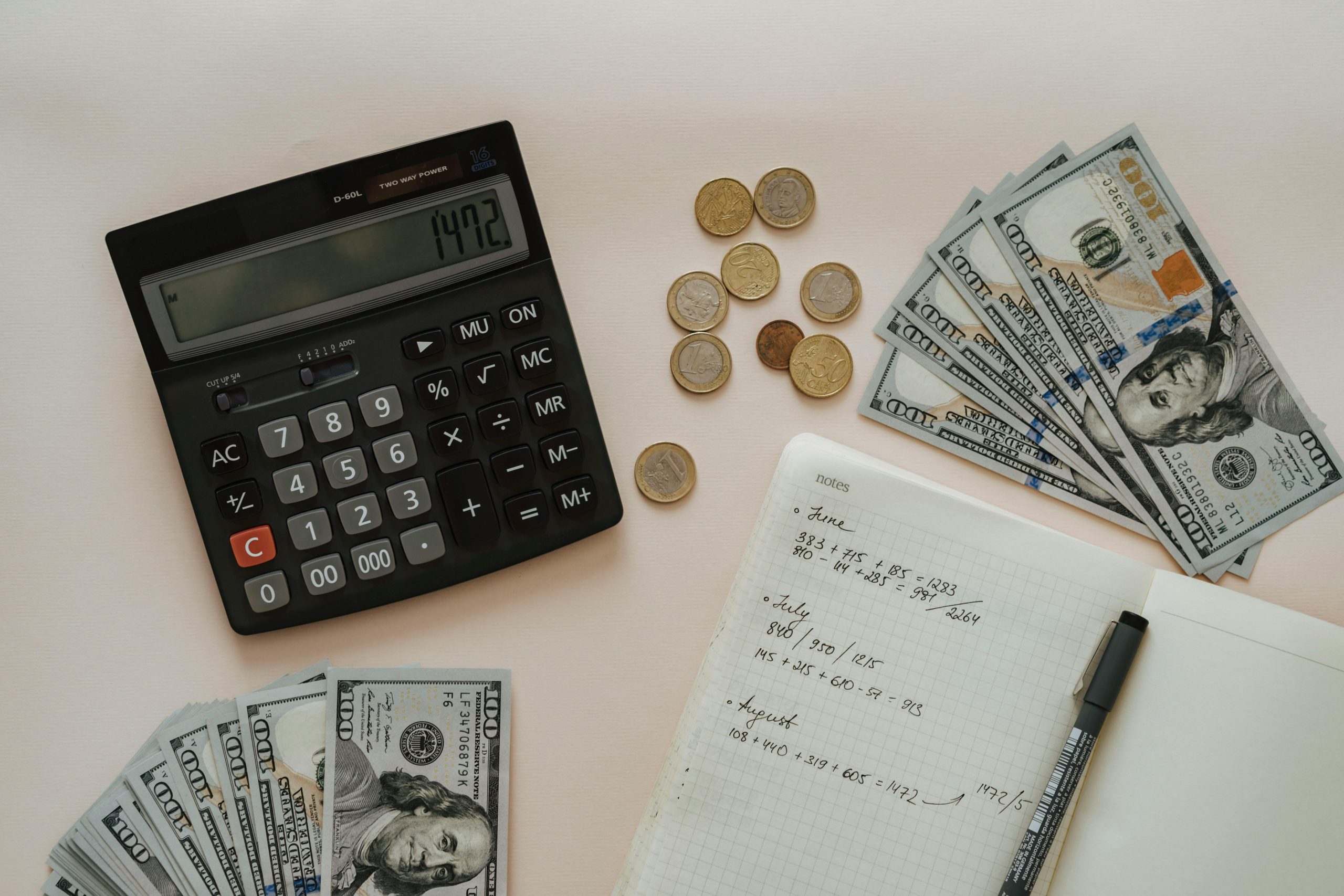
One of the signs of having a good financial health is determined by one’s ability to save. The 50/20/30 rule for saving is a guideline developed by Elizabeth Warren. This US senator, an expert in insolvency law, has devised a way of managing income that guarantees savings. She explains it all in her book All Your Worth: The Ultimate Lifetime Money Plan.
The general approach to calculating the amount we set aside for savings It usually involves subtracting your income from your expenses. And whatever is left over should be put into savings.
The the 50/20/30 rule takes a different approach when calculating that amount.
How do you apply the 50/20/30 rule to save money?
To apply this rule, we need to keep track of our personal and household income and expenditure. The ideal tool for this is to create a budget in a spreadsheet.
In the 50/20/30 rule for saving, we start with monthly income after tax has been deducted. In other words, we start with net income.
We should allocate the remaining amount as follows:
- 50% is intended to meet basic needs.
- 20% is intended for savings.
- 30% is intended for leisure and treats.
Identify your basic needs
When it comes to analysing basic needs or basic needs, it may be that the 50% percentage falls short. It is therefore important to be clear about which items should be included in this section. These include those that are essential for day-to-day life:
- Rent or mortgage payments on the main residence
- Electricity, water, gas and service charge bills. Although some expenses, such as council tax and insurance, are not paid monthly, we must work out the monthly pro rata amount and take them into account.
- Food for the month, school expenses, clothes.
- Petrol or transport costs.
Spending on leisure and non-essential treats
Without a doubt, this percentage is the most difficult to adjust. After all, the 30% is the portion we will set aside to improve our quality of life.
Activities such as eating out, joining a gym, going to the cinema and going on trips will need to be planned and adjusted to fit within the budget for this category.
20% for savings
This aspect of saving is the most difficult to achieve. To do so, we can use a few tips. For example, using a different account to the one you usually use to set that money aside. Another option is to set that amount aside as soon as you receive your monthly salary or your income that we have to work with. In this way, we’ll gradually get used to the idea, psychologically speaking, of the actual amount available to us for the month.
The reality of the 50/20/30 rule for saving
This savings rule involves a a minor problem which is why most people find it difficult to put it into practice.
The fact is that the 50% percentage is usually insufficient to meet the basic needs of a personal or household budget. This is particularly true in recent times, when inflation has caused food and transport costs to soar.
As well as not being very practical for people whose income is not regular or consistent, but rather they vary from month to month.
Other ways to save money
Faced with this situation, there are other, less orthodox ways to save which can help us build up our savings account bit by bit.
The rounding method has been put into practice in recent years. It involves rounding up the purchases and payments we make and putting the change into another account or digital wallet. For example, if we’re buying a loaf of bread that costs 80 cents and we pay with a 1-euro coin, we’ll put the 20 cents we have left over into a different e-wallet from the one we normally use.
Another way to round up is to adjust the amount to a multiple of 5. In other words, if we pay 3.18 euros for something, we work out the difference up to 5 euros. In this case, the amount set aside for savings would therefore be 1.82 euros.
This can also be done for card payments. Some banks have specific tools for carrying out this function. These include virtual money boxes which allow us to put our savings aside.
And you – have you thought yet about which method you’re going to use to increase your savings?