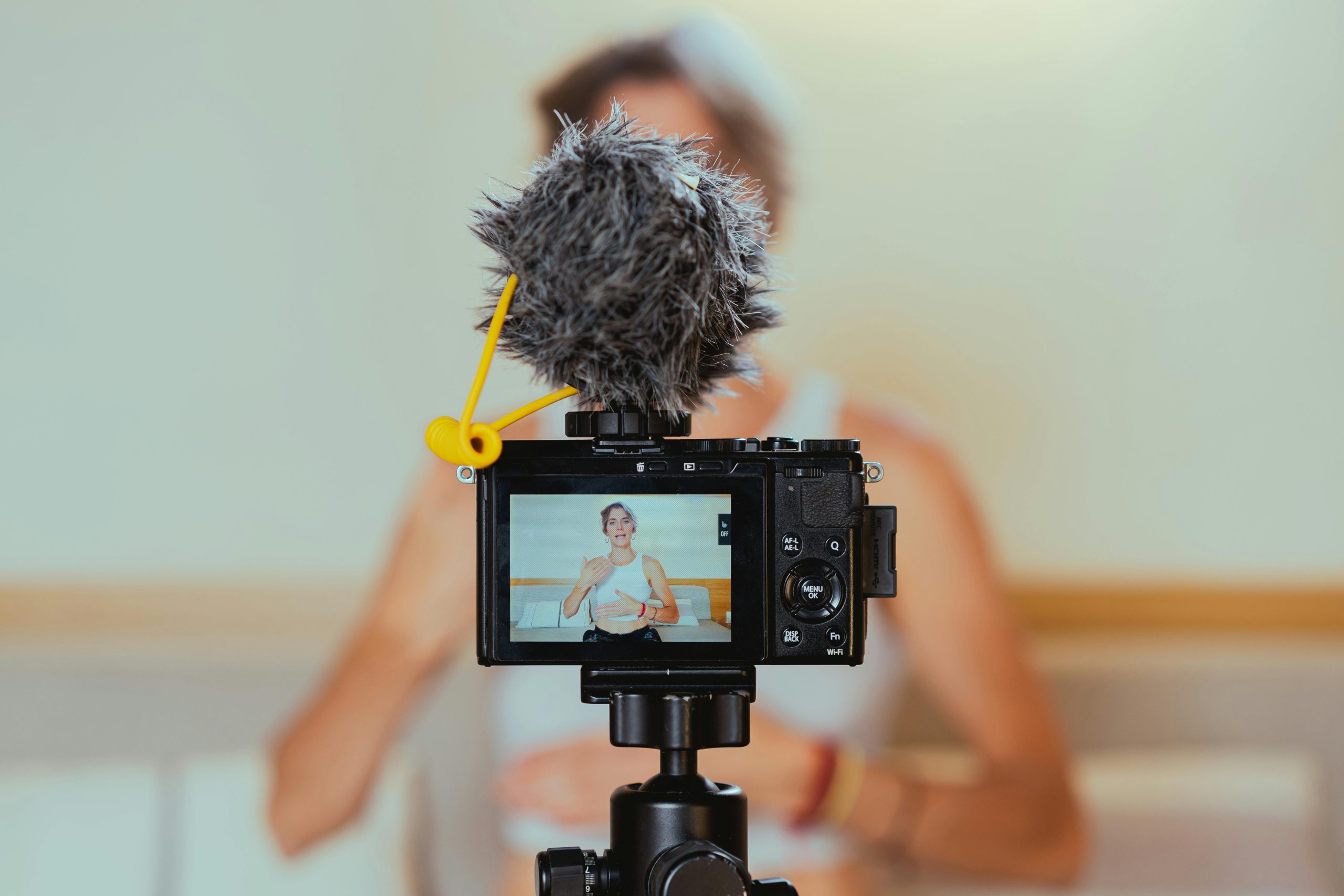
You’re scrolling through Instagram Stories and come across one about a make-up product. The influencer The person who appears in the video looks surprisingly real and speaks convincingly. However, something seems different – something subtle that you can’t quite put your finger on straight away: it’s a virtual influencer, created with artificial intelligence (IA).
As the line between the real and the virtual becomes increasingly blurred, these AI influencers are redefining the marketing and interaction on social media, offering a new dimension of manufactured authenticity. A bit of a contradiction, isn’t it? In this post, we discuss the topic. Read on!
Why have virtual influencers emerged?
The emergence of the virtual influencer It is a combination of various phenomena, mainly technological. Firstly, the social media are growing in popularity among users every day. This has opened the door to influencers connecting with their audience on a massive scale – a fertile ground that brands have been quick to capitalise on.
In the same vein, the technological advances of recent years have paved the way for new ways of creating and making, and the artificial intelligenceis an example of this. It is a technology that has been refined to the point where it is now possible to create virtual characters increasingly realistic and believable. The combination of computer graphics and AI algorithms has paved the way for the virtual influencers.
On top of all this, there are the brands who are looking for new ways to sell and position themselves in an increasingly competitive market. In this regard, a virtual influencer, generated using AI, can attract and hold the attention of large audiences, making it a powerful tool for marketing and advertising campaigns.
Each of these issues has served as a catalyst for the emergence of artificial characters. They are virtual influencers: designed to be perfect, to captivate and persuade the audience, to engage with followers, to answer their questions and to promote products with a level of efficiency that only technology can offer.
Virtual influencers vs. real influencers: the differences
In light of what has been said so far, we can state that the AI-generated influencers They are virtual characters that have been created using advanced technologies such as computer graphics y machine learning algorithms. We’re talking about characters who don’t physically exist, but who do interact on social media and generate commitment with his followers.
It is precisely these characteristics that set them apart from the real-life influencers. Let’s first look at the advantages offered by the virtual influencer compared to the real:
- Brand consistency: Virtual influencers maintain a consistent image and message, as they are specifically designed to do so. In the case of real influencers, the natural evolution of the individual makes this consistency difficult to achieve, as their tastes or opinions may change.
- Availability: AI-generated influencers are available at all times for campaigns and collaborations. As is only to be expected – and in accordance with the law – humans do not work 24 hours a day.
- Innovation: Without a doubt, virtual influencers are the result of cutting-edge technology; as such, they can attract audiences interested in innovation and digital culture.
- Control: Brands have complete control over the actions and content they publish; they are the ones who create the virtual influencer and decide what they say, how and when.
Disadvantages of virtual influencers
- Perfection: Virtual influencers are designed not to make mistakes; they must be perfect. This can put off users who are looking for a sense of connection and real-life experiences.
- Lack of authenticity: In this regard, we can say that, on many occasions – and particularly in the case of certain brands – real-life stories are needed that artificial intelligence cannot replace. Let’s suppose that a brand sells a product that skincare, would you listen to a virtual character who, clearly, hasn’t been able to try the product and doesn’t know what results it delivers?
- Lack of empathy: Real influencers can express emotions and empathise with their audience in a way that virtual characters cannot. This can undermine the trust towards virtual influencers.
- Lack of flexibility: At live events or in challenging situations, virtual influencers find it harder to improvise, adapt and steer the conversation in a new direction.
Benefits for brands from virtual influencers
So, if we weigh up the pros and cons of a virtual influencer, is it worth brands investing in them? The answer is: it depends. It depends on the brand’s objectives, its target audience, and the product or service it sells.
Below, we explain the benefits the benefits that AI-generated influencers can bring to brands:
- Complete control over the image and the message: As we mentioned, unlike human influencers, virtual influencers are entirely designed and controlled by the brands, which ensures perfect consistency in the image and message they aim to convey.
- Global reach and viral potential: Virtual influencers can reach a global audience and have the potential to go viral quickly, thereby amplifying the impact of campaigns marketing. However, it is important to note that this depends on the technology behind the artificial intelligence.
- Unique and engaging content: These digital characters can be created to match a brand’s aesthetic and generate creative and engaging content that captures the public’s attention.
- Saving time and resources: Working with virtual influencers can be more efficient in terms of time and resources than collaborating with human influencers.
- Innovation and modernity: The use of virtual influencers can position a brand as innovative and at the forefront of technological trends and marketing.
Some examples of virtual influencers
The first step towards the ‘boom’ in virtual influencers was taken in 2016 with the creation of Lil Miquela, created by the company Brud. It has a visual appearance similar to that of a real person. It shares content related to fashion, music and lifestyle on its social media accounts. On Instagram alone, it has 2.6 million followers.
Meanwhile, in 2017, the ‘digital supermodel’ was designed Shudu Gram. Shudu, created by photographer Cameron-James Wilson, has gone viral on social media thanks to her stunning beauty and unique style. Although Shudu is a digital avatar, her appearance resembles that of an African woman. This has sparked controversy over whether it is appropriate for a white man (her creator) to capitalise on the image of a Black woman without being part of that community.
Noonoouri She joined Instagram on 1 February 2018 and has been growing ever since. In this case, she is a virtual influencer who does not mimic human appearance, but rather seeks to stand out through the quality of her fashion-related content. She was created by graphic designer Joerg Zuber and is characterised by a distinctive style, which has led to collaborations with renowned brands. Furthermore, she is the first virtual influencer to sign a contract with a record label as a singer.
Did you find this post about virtual influencers interesting? Subscribe to Educa.Pro for more business news!